Imagine a battlefield where power never fails—no fuel convoys, no blackouts in the Arctic freeze, just steady, unbreakable energy. The U.S. military is turning that vision real with microreactors—compact nuclear systems that could transform how bases operate in extreme or contested environments.
Eielson Leads the Charge in Alaska’s Icy Frontier
In June 2025, the Defense Logistics Agency Energy issued a Notice of Intent to Award a contract to Oklo, Inc. for the Department of the Air Force’s first microreactor pilot at Eielson Air Force Base, Alaska. This remote outpost, home to F-35A fighters, endures brutal winters where temperatures plunge to 50 below zero. Currently powered partly by coal, Eielson needs reliable energy that won’t quit when logistics falter.
The plan calls for Oklo to design, build, own, operate, and eventually decommission a microreactor delivering up to 5 megawatts of electricity and heat. Under a 30-year firm-fixed-price power purchase agreement, the base gets continuous power without relying on the grid. Officials see it as a game-changer for mission resilience in harsh conditions. Col. Paul Townsend of the 354th Fighter Wing wants Eielson to become the first DoD installation with on-site advanced nuclear, keeping fighters “ready to go at 50 below.”
Buckley SFB Joins the Push for Space Force Strength
Fast-forward to April 2026: The Department of the Air Force and Defense Innovation Unit named Buckley Space Force Base in Colorado and Malmstrom Air Force Base in Montana as preferred sites under the separate Advanced Nuclear Power for Installations (ANPI) program. Buckley stood out for its solid utility infrastructure, available land, and critical mission demands.
ANPI aims to deploy contractor-owned microreactors at installations by 2030 or sooner, pairing each base with the best-fitting vendor technology. Unlike Eielson’s demonstration pilot, ANPI focuses on broader energy security across Air Force and Space Force sites. Both programs highlight the same goal—uninterrupted power that strengthens lethality and readiness under the National Defense Strategy.
Microreactors: Small Size, Big Impact
These advanced systems generate 1-50 megawatts, run for years without refueling, and boast enhanced safety features in a tiny footprint. They produce both electricity and heat, perfect for remote bases or high-stakes operations where diesel generators or vulnerable supply lines fall short. In a world of potential disruptions, microreactors promise grid-independent resilience.
Oklo: The California Company Behind the Tech
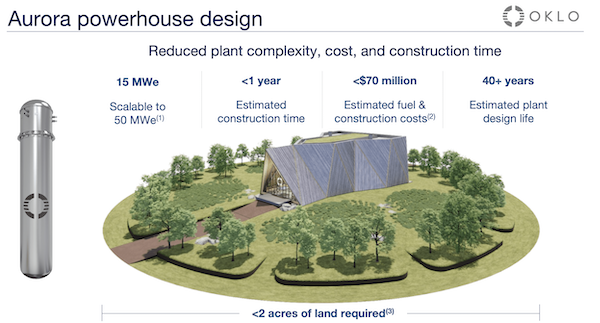
Oklo, Inc., headquartered in Santa Clara, California, is the selected partner for Eielson. The company develops liquid metal-cooled fast reactors, notably its Aurora Powerhouse design. Oklo would handle full responsibility for the plant, delivering clean, reliable energy directly to the base. It is progressing through Nuclear Regulatory Commission licensing and testing at Idaho National Laboratory. Selection followed competitive evaluation emphasizing innovation and safety.
The Road Ahead for Military Nuclear
If these pilots succeed, microreactors could spread to more installations facing energy challenges. The commercial vendor model—where companies like Oklo own and run the reactors under long-term agreements—keeps costs predictable while meeting strict licensing standards. Partnerships with the NRC, Department of Energy, and others ensure safety remains paramount.
From Alaska’s frozen tundra to Colorado’s high plains, the military is betting on nuclear microreactors to eliminate energy as a vulnerability. This shift could deliver safer, more secure power projection, keeping U.S. forces dominant no matter the conditions. The era of battlefield blackouts may soon be over—replaced by reactors that never sleep.